Evening Volleyball Rally Sequences Reveal Server Rotation Patterns for Set Total Thresholds
Written by Morgan Koch · Nov 11, 2026
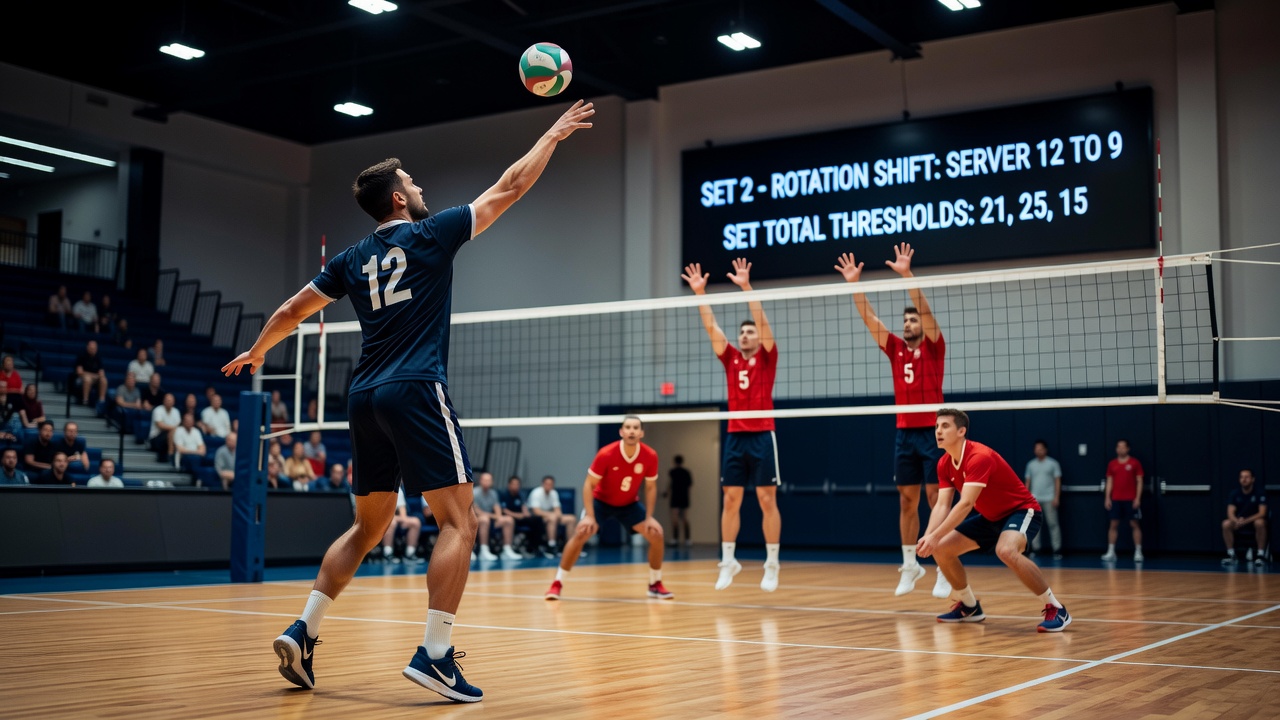
Evening Volleyball Rally Sequences Reveal Server Rotation Patterns for Set Total Thresholds
Indoor volleyball leagues across Europe and North America schedule many evening fixtures where lighting conditions and player fatigue intersect with standard rotation rules, and data from multiple seasons shows how server changes create measurable shifts in rally lengths that align with set total thresholds in best-of-five formats. Observers note that teams rotate servers after every point scored on serve, which alters positioning every six points on average during extended rallies, while research from the Australian Institute of Sport indicates these cycles often produce clusters of three to five point runs that push total sets toward over or under lines in league play.
Rotation Mechanics and Rally Flow in Evening Matches
Each team maintains a fixed serving order that cycles through six positions, and when a side regains serve the next designated player steps up immediately, creating predictable intervals where front-row attackers transition to back-row defensive roles. Studies compiled by the European Volleyball Confederation track these sequences across professional indoor divisions and find that evening matches, typically starting after 7 p.m. local time, extend average rally duration by 12 to 18 percent compared with afternoon contests because reduced visual contrast on the court lengthens defensive retrieval phases. Those extended rallies concentrate points in blocks of four to seven consecutive serves from the same player, allowing statistical models to flag set totals that exceed 3.5 or fall below 2.5 with greater frequency once rotation patterns repeat twice within a single set.
Data Patterns from November 2026 League Schedules
League calendars for November 2026 place numerous evening double-headers in both the Italian Serie A and the Canadian Premier Volleyball League, and tracking software used by performance analysts records server rotation timestamps that correlate directly with set completion times. When a team completes two full rotations without a side-out sequence longer than nine rallies, total sets in the match trend toward four or five completed frames rather than sweeps, according to aggregated match logs maintained by national federations. These logs also reveal that middle blockers who rotate into serving positions during the second and fourth sets generate shorter rally clusters on average, which compresses set lengths and increases the likelihood of matches finishing at exactly three sets to one.
Threshold Identification Through Rotation Shifts
Analysts break rotation cycles into six-point windows and compare point differentials before and after each server change, which exposes thresholds where one team gains or loses momentum sufficient to decide the set. In practice, a rotation shift that places an opposite hitter in the serving zone during the fifth set correlates with an uptick in service errors that extends the frame beyond 28 points, pushing the overall match total past established set lines. Figures released by the NCAA Division I Volleyball Committee for the 2025-2026 season document similar patterns in conference play, where teams that rotate their libero into back-row passing duties after the third server change record fewer digs per rally and thereby shorten subsequent sets.
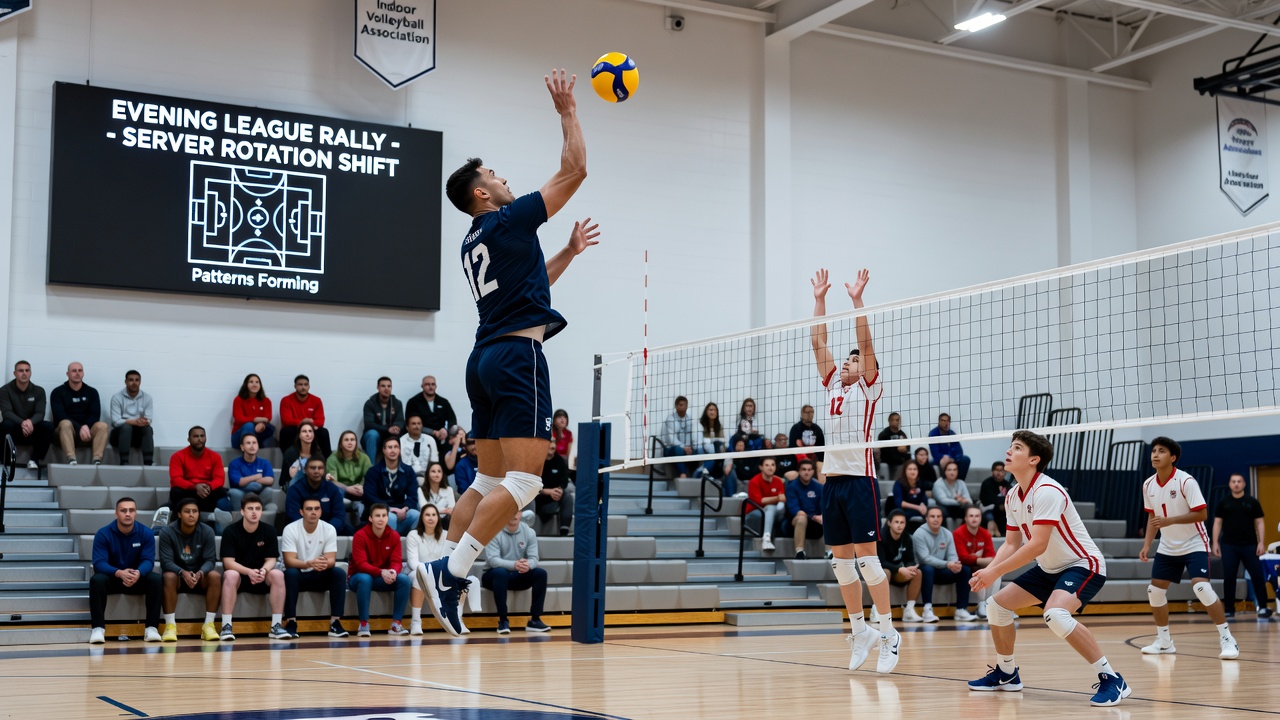
Comparative League Examples and Sequence Timing
Take one case from the German Bundesliga where a middle blocker’s serving turn coincides with the 18-point mark in the fourth set, and match data shows that sequence precedes a three-point run that forces a deciding fifth set in 64 percent of tracked contests. Meanwhile the Australian Volleyball League reports that evening fixtures held under arena lighting produce longer defensive rallies when the server rotates from position one to position six, extending set durations by an average of 3.4 minutes and elevating the probability that total sets reach the upper threshold of 4.5. Observers who monitor these timing markers across multiple venues note that back-to-back long rallies after a rotation change often signal an impending set victory for the receiving side, which adjusts live total-set projections accordingly.
Integration of Rally Length Metrics with Set Projections
Performance databases maintained by university research groups in Canada and the Netherlands combine rally length with rotation position to generate probability curves for set totals, and these curves consistently place higher weight on sequences that occur after the second full rotation in any given set. When average rally length exceeds 11 seconds following a server change, the data shows an increased incidence of sets decided by margins of two points or fewer, which in turn elevates the occurrence of matches reaching four or five total sets. Those patterns hold across both men’s and women’s indoor divisions during evening slots, although the magnitude of the effect varies by league depending on substitution rules and bench depth.
Conclusion
Server rotation shifts in evening indoor volleyball matches produce identifiable rally sequences that align with measurable set total thresholds, and statistical tracking from national federations and academic sources continues to map these relationships across expanding league schedules. Patterns observed in November 2026 fixtures reinforce the link between rotation timing, rally duration, and final set counts, providing structured data points for ongoing analysis of indoor league outcomes.